中文
中文 English
 français
 Deutsch
 русский
 español
 português
 日本語
日本語 한국의
한국의 العربية
关键性能
| ● 5 MHz to 6 GHz wideband analog RF transmission |
| ● RJ45 Ethernet remote control |
| ● 0–31 dB TX attenuation adjustment in 1 dB steps |
| ● LNA ON/OFF operating modes |
| ● 6 dB / 36 dB nominal link gain |
| ● RF level and temperature monitoring |
| ● 1550 nm optical link with 50 Ω RF interfaces |
| ● Single-mode fiber transmission |
| ● RGB status indicators |
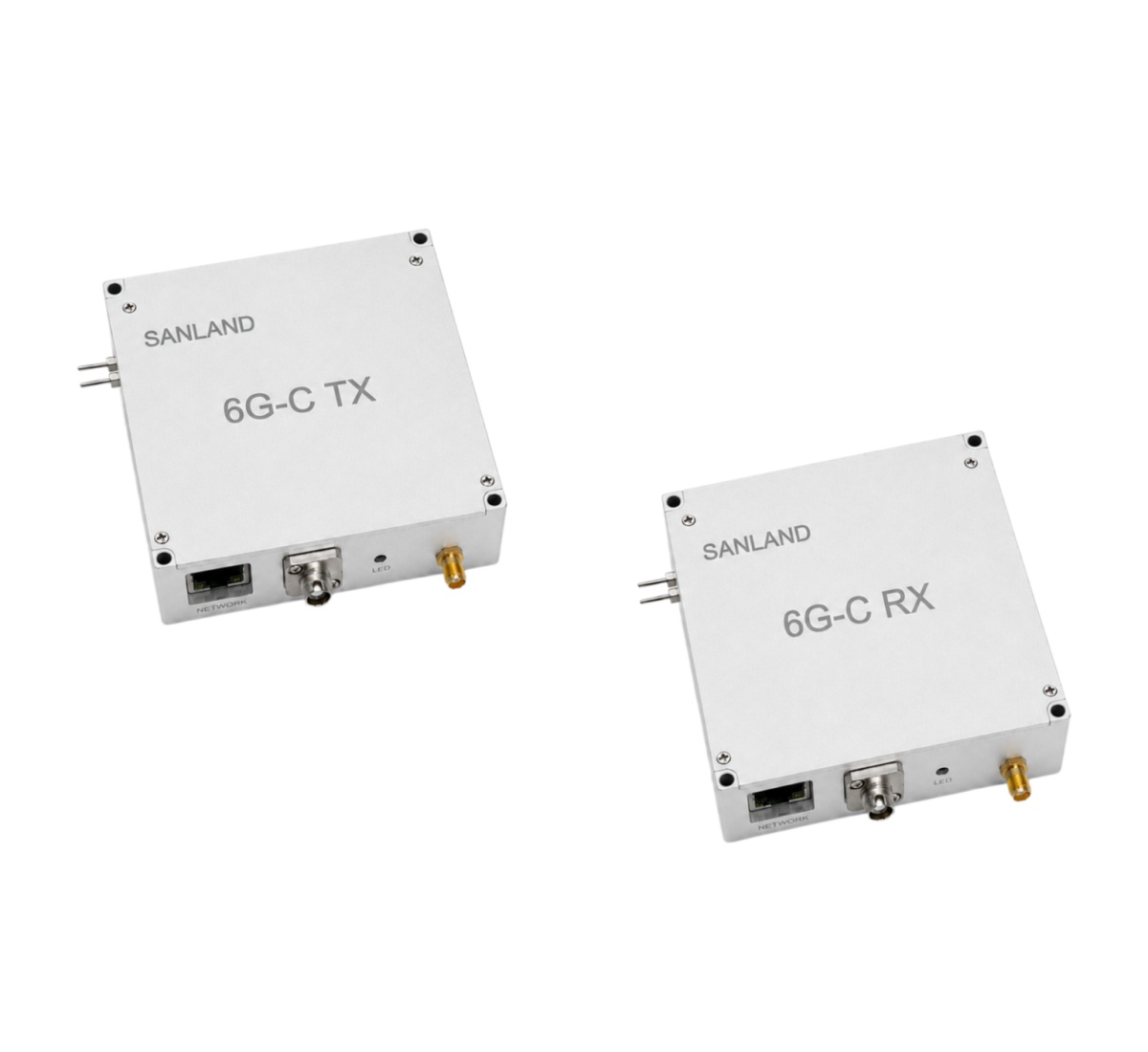
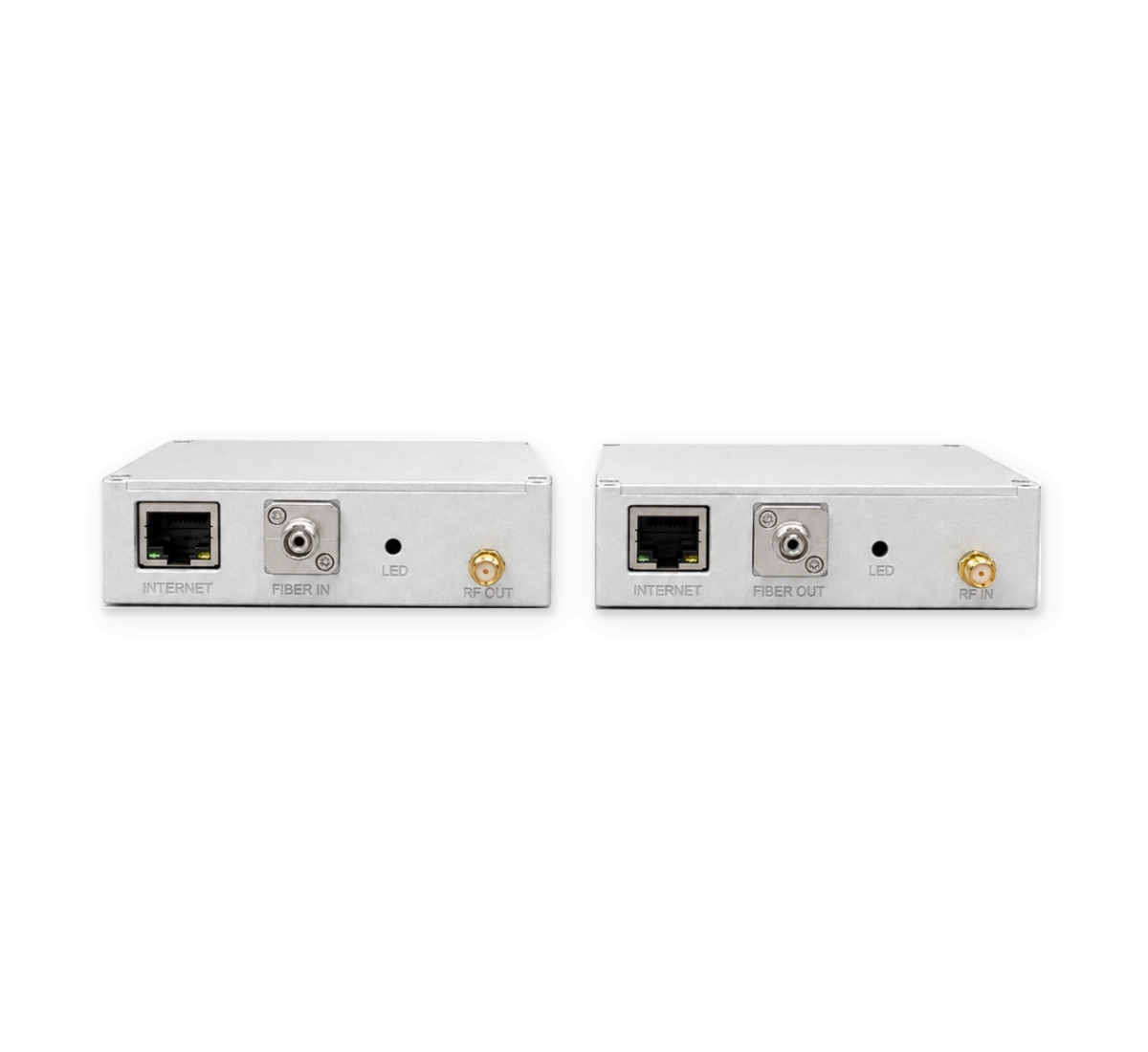
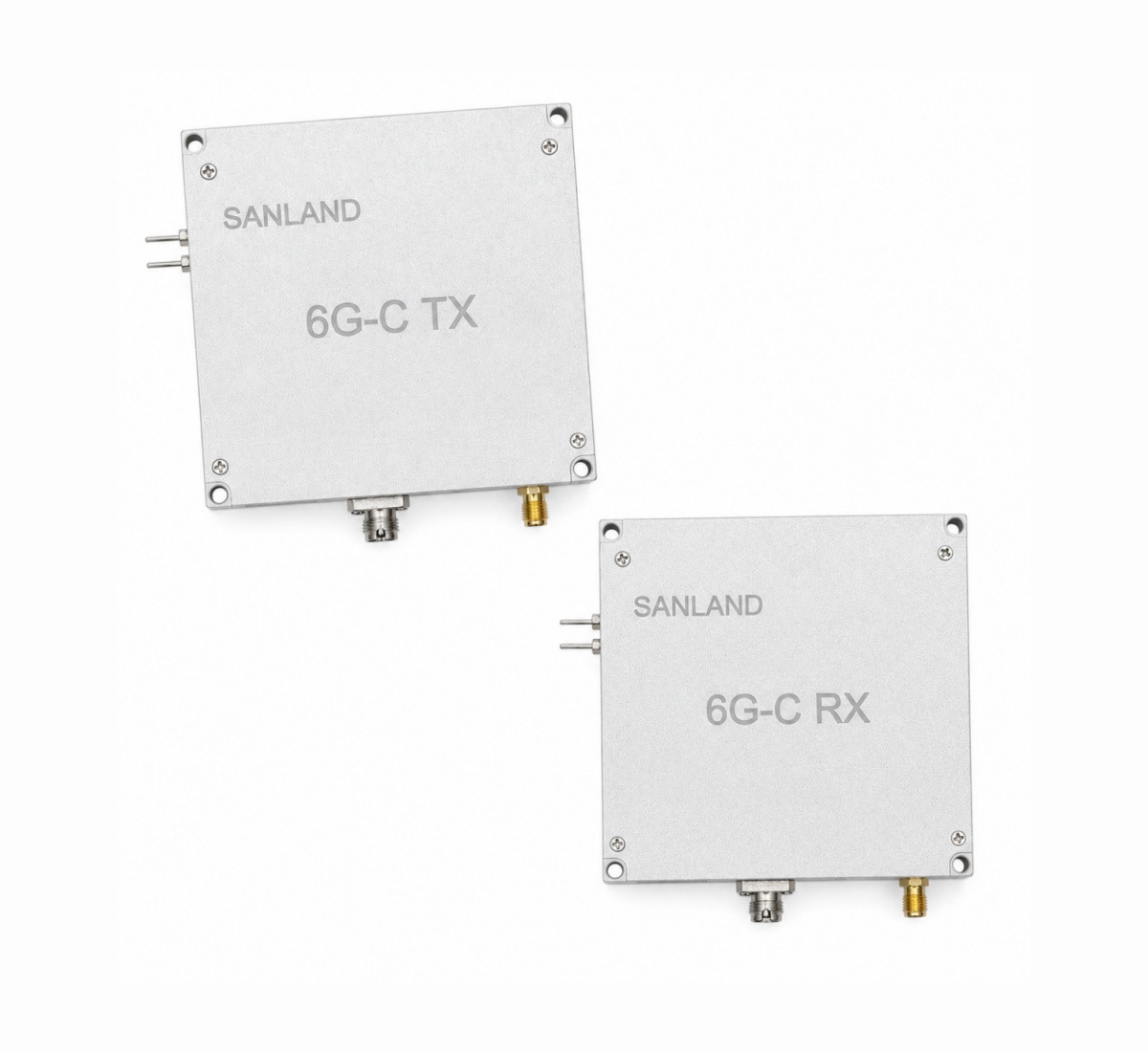
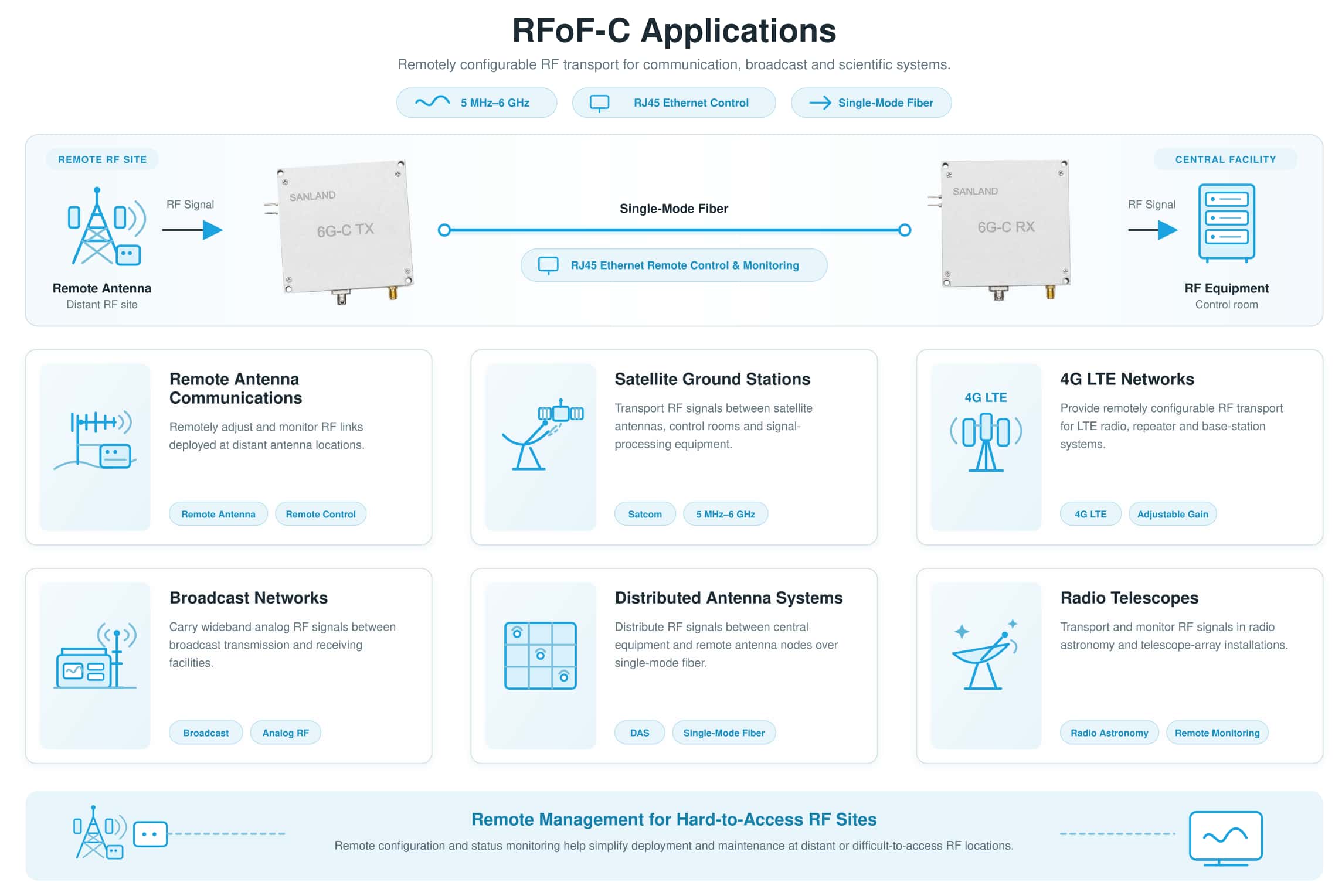
The SANLAND RFoF-C is a remotely controlled analog RF over fiber link designed to transport RF signals from 5 MHz to 6 GHz over single-mode fiber. One 6G-C TX and one 6G-C RX form a complete point-to-point RF optical link, with 50 Ω SMA interfaces and a 1550 nm FC/APC optical connection.
An internal microcontroller, programmable attenuation and selectable LNA modes allow users to remotely configure link gain for different RF input conditions. Through the RJ45 Ethernet interface, operators can adjust gain and monitor RF level and temperature from a remote computer, reducing the need for on-site maintenance at remote antenna, Satcom, DAS and broadcast locations.
RFoF-C Functional Architecture
A complete RFoF-C link integrates RF signal conditioning, optical conversion, embedded monitoring and Ethernet control across the transmitter and receiver.
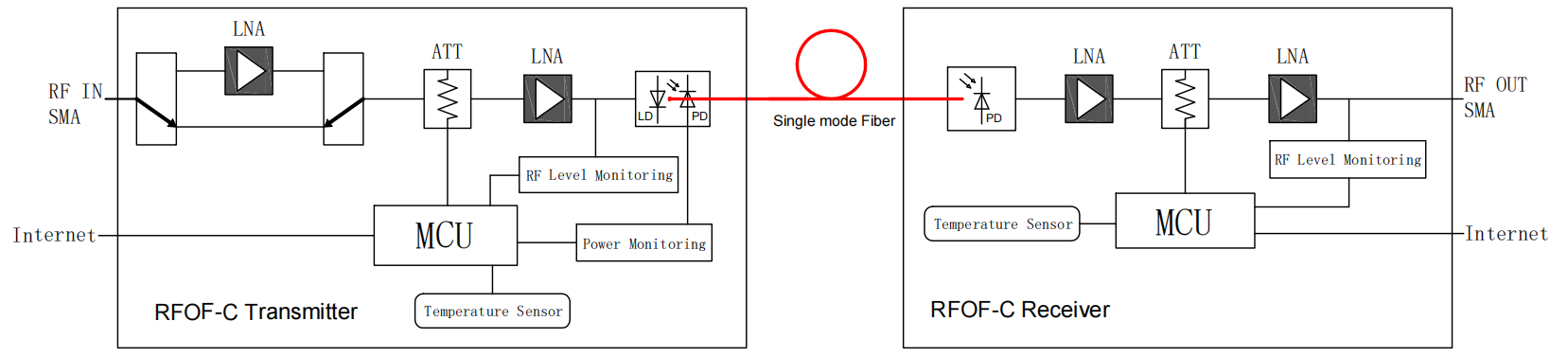
LNA and attenuation stages manage RF signal levels through the link.
RF signals are converted for transmission over single-mode fiber and recovered at the receiver.
Embedded MCUs connect control and monitoring functions to the RJ45 Ethernet interface.
Selectable RF Operating Modes
| Parameter | LNA OFF | LNA ON |
| Nominal Link Gain | 6 dB | 36 dB |
| Input P1dB | −5 dBm | −35 dBm |
| Noise Figure | 29 dB | 8 dB |
| SFDR | 103 dB·Hz2/3 | 98 dB·Hz2/3 |
| Gain Flatness | ±2.5 dB | ±2.5 dB |
| Flatness over Any 36 MHz | ±0.5 dB | ±0.5 dB |
LNA OFF : Higher input-power handling and 103 dB·Hz2/3 SFDR for stronger RF input signals.
LNA ON : 36 dB nominal link gain and 8 dB noise figure for low-level RF signal reception.
Frequently Asked Questions
Through the RJ45 Ethernet interface, users can remotely adjust link gain, including control of the transmitter’s programmable attenuation. Remote PC software also supports RF-level and temperature monitoring.
The RFoF-C connects to a control computer through its RJ45 Ethernet interface. Remote PC software provides access to the available adjustment and monitoring functions.
The RFoF-C transmitter provides 0–31 dB programmable attenuation in 1 dB steps, allowing the RF signal level to be adjusted for different input conditions.
LNA ON provides 36 dB nominal link gain, an 8 dB noise figure and a −35 dBm input P1dB, making it suitable for lower-level RF input signals. LNA OFF provides 6 dB nominal link gain, a 29 dB noise figure, a −5 dBm input P1dB and 103 dB·Hz2/3 SFDR for stronger RF inputs.
A complete RFoF-C link requires one 6G-C TX and one 6G-C RX. The transmitter converts the RF input to an optical signal for transmission over single-mode fiber, and the receiver converts the optical signal back to RF at the remote end.
RFoF-C is designed for applications that require remote control and real-time monitoring, rather than only RF signal transmission. In addition to 5 MHz–6 GHz analog RF over Fiber transmission, it integrates an internal MCU, programmable RF control, RJ45 Ethernet connectivity, RF level monitoring and temperature monitoring.
This makes RFoF-C particularly suitable for remotely deployed RF systems where operating parameters need to be adjusted or monitored from a centralized location.
Explore SANLAND 6GHz RFoF Solutions
RF Performance
| Parameter | LNA OFF | LNA ON |
| Frequency Range | 5 MHz–6 GHz | 5 MHz–6 GHz |
| Adjustable Link Gain (nominal value) | 6 dB | 36 dB |
| Programmable TX Attenuation | 0–31 dB | 0–31 dB |
| Attenuation Step | 1 dB | 1 dB |
| Gain Flatness | ±2.5 dB | ±2.5 dB |
| Flatness over Any 36 MHz | ±0.5 dB | ±0.5 dB |
| Input P1dB | −5 dBm | −35 dBm |
| Noise Figure | 29 dB | 8 dB |
| SFDR | 103 dB·Hz2/3 | 98 dB·Hz2/3 |
| Maximum Input, No Damage | +7 dBm | +7 dBm |
| Input/Output VSWR | 2.0:1 | 2.0:1 |
| RF Impedance | 50 Ω | 50 Ω |
| RF Connector | SMA | SMA |
Optical and Control
| Parameter | Specification |
| Optical Wavelength | 1550 nm typical |
| Optical Output Power | 2 ±0.5 mW |
| Fiber Type | Single-Mode Fiber |
| Optical Connector | FC/APC |
| Control Interface | RJ45 Ethernet |
| Remote Functions | Gain adjustment, RF level and temperature monitoring |
| Status Indicator | RGB LED |
Electrical, Mechanical and Environmental
| Parameter | Specification |
| Module Power Input | 12 V DC |
| TX Current, LNA OFF | 310 mA |
| TX Current, LNA ON | 385 mA |
| RX Current | 310 mA |
| Dimensions | 92 × 90 × 25 mm |
| Operating Temperature | −20°C to +75°C |
| Storage Temperature | −40°C to +85°C |
| Storage Relative Humidity | 5% to 95% |
RFoF-C enables wideband RF transport for distributed and hard-to-access sites, with Ethernet-based control and monitoring to simplify system operation and on-site maintenance.




 支持IPv6网络